You are in your twenties, you have just received your first real pay cheque and it feels like there is never enough. Rent, transport, food, the odd night out — by month-end the balance is zero. Investing seems like something only people with spare cash can do.
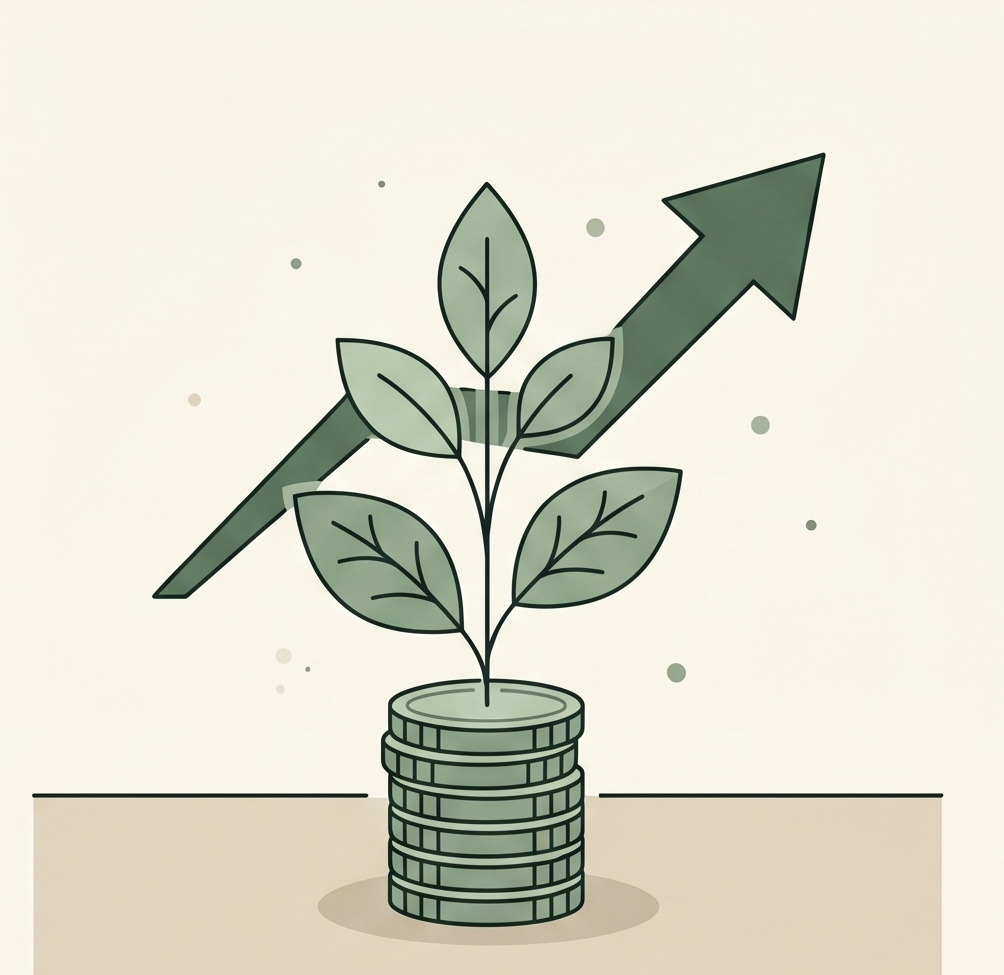
But here is the paradox: precisely because your salary is low, every euro you invest now is worth more than ten euros invested at 45. Not because of magic, but because of mathematics. And this chapter will show you how to do it even when it feels impossible.
Your greatest advantage
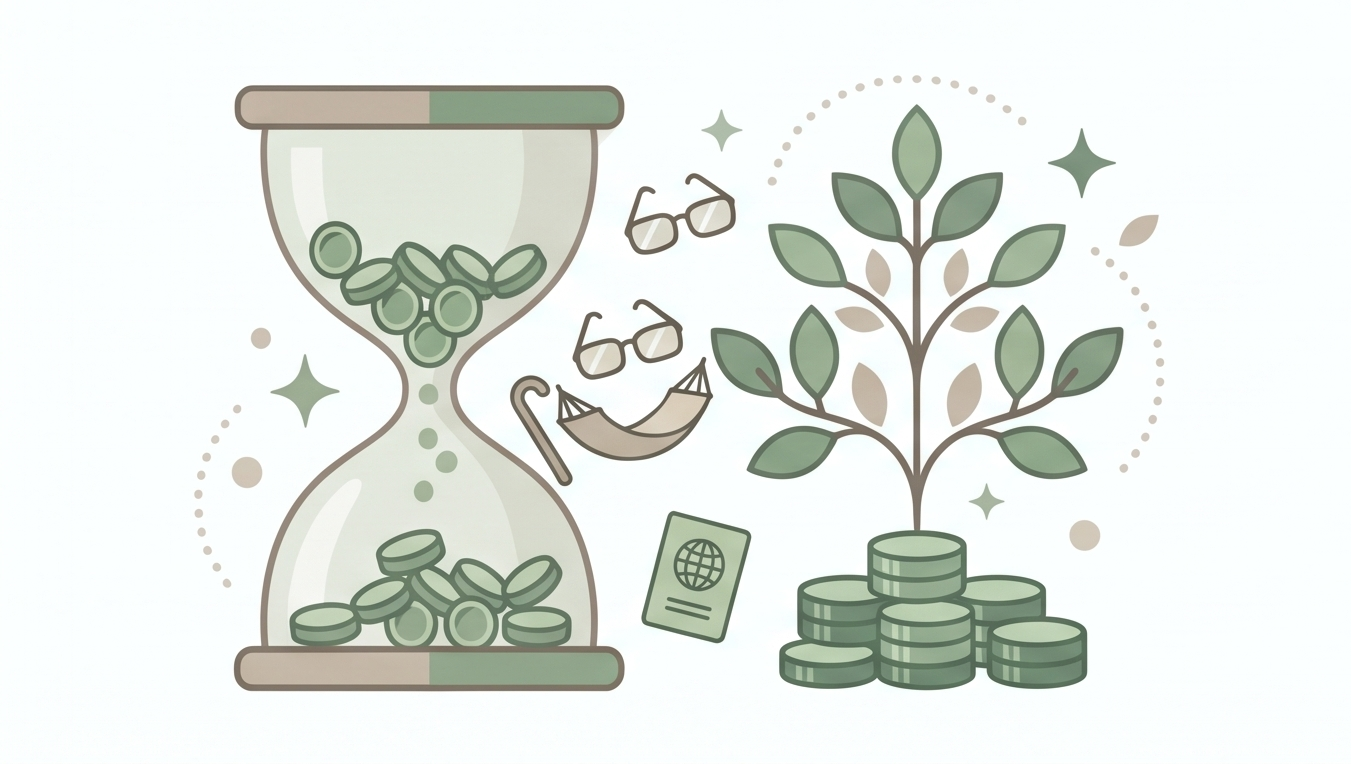
At 20 you possess something no 50-year-old millionaire can buy: time. If you invest €100 per month from age 22 to 65 at an average 7% annual return, you will accumulate roughly €330,000. From your own pocket you will have contributed €51,600. The remaining €280,000 or so is pure compound growth.
If you wait until 35 to start with the same monthly amount, by 65 you will have around €122,000. Less than half, for having waited 13 years.
This gap can never be closed. No financial product, no sophisticated strategy, no stroke of luck compensates for a lost decade of compounding. Your edge at 20 is not knowledge (it will come), nor capital (it is small), nor experience (it is nil). Your edge is time, and it shrinks every month you do not invest.
The 10% rule
The first step is brutally simple: set aside 10% of your net salary before spending anything. If you earn €1,200, that is €120. If you earn €1,800, it is €180.
This is non-negotiable. It is not “whatever is left at the end of the month” (nothing is ever left). It is an automatic transfer scheduled for the day after payday. It leaves your account before you can touch it.
If 10% feels impossible on your current salary, start with 5%. But start. The habit matters more than the figure. Once your brain adjusts to living on 90% (or 95%), you stop noticing.
That 10% splits into two parts:
- Emergency fund (until you have 3 months of expenses): in a high-interest savings account or money-market fund with instant access.
- Long-term investment (once the emergency fund is covered): into a global index fund.
Once your emergency cushion is built, 100% of the monthly contribution goes straight into investing.
One fund is enough
At 20, your investment portfolio should be the most boring thing in your life. A single global index fund that tracks the world stock market — MSCI World, FTSE All-World or equivalent.
You do not need:
- Bonds (your horizon is 40+ years; you can absorb all the volatility)
- Individual stocks (you lack the time and expertise to analyse companies)
- Cryptocurrency as a core investment (extreme volatility, no productive backing)
- Actively managed funds with high fees (90% fail to beat the index long-term)
- Complex products you do not fully understand
A low-cost global index fund (TER below 0.3%) gives you diversification across 1,500+ companies in 23 developed countries. It is all you need for your first decade as an investor.
When your wealth grows and your knowledge deepens, there will be time to refine. Right now the priority is to start, not to optimise.
DCA: your autopilot
DCA stands for Dollar Cost Averaging. It is the strategy of investing a fixed amount every month, regardless of what the market is doing.
When the market rises, you buy fewer units (they are expensive). When the market falls, you buy more (they are cheap). Over time, your average purchase price smooths out and you eliminate the risk of putting all your money in at the worst possible moment.
DCA has another fundamental advantage: it removes decisions. You do not have to wonder whether today is a good day to invest. You do not have to read financial news. You do not have to feel that “the market is overvalued.” On the 2nd of every month your bank automatically transfers €X to your fund. Done.
This automation is crucial at 20, when the temptation to spend is high and the motivation to invest is low (because results take years to become visible). If you have to decide each month whether to invest or not, the answer will be “no” more often than you think.
Mistakes that cost decades
“I’ll wait until I know more”: Financial knowledge is acquired by investing, not by reading about investing. Learn the basics (this chapter is enough) and start. You can keep learning while your money works.
“€100 isn’t worth it”: Yes, it is. Not because of this month’s €100 but because of the habit you create and the decades of compounding that accumulate. The early years always seem irrelevant. The later years prove they were not.
“I’ll wait for a dip”: Nobody knows when the market will fall or rise. Studies consistently show that time in the market beats timing the market. Invest today and move on.
“My mate made 300% on a coin”: And a hundred others lost 80%. Investing is not a casino. It is a slow, boring, reliable process that works over 20–40 years. Quick gains are indistinguishable from luck until the luck runs out.
“I’ll invest when I earn more”: When you earn more, you will spend more (lifestyle inflation). The moment is now, with what you have. Increase your contribution when your salary rises, but never make starting conditional on a future pay cheque that may be years away.
At 20 you need only three things: a global index fund, an automatic monthly transfer and the discipline not to touch that money for decades. Everything else is noise. Start today, even if it is small. Your 50-year-old self will thank you in ways you cannot yet imagine.
Important disclaimer: Investing involves risks, including the possible loss of your invested capital. This article is for educational purposes only and does not constitute investment advice. Before making any financial decision, educate yourself properly and, if needed, consult a qualified professional.