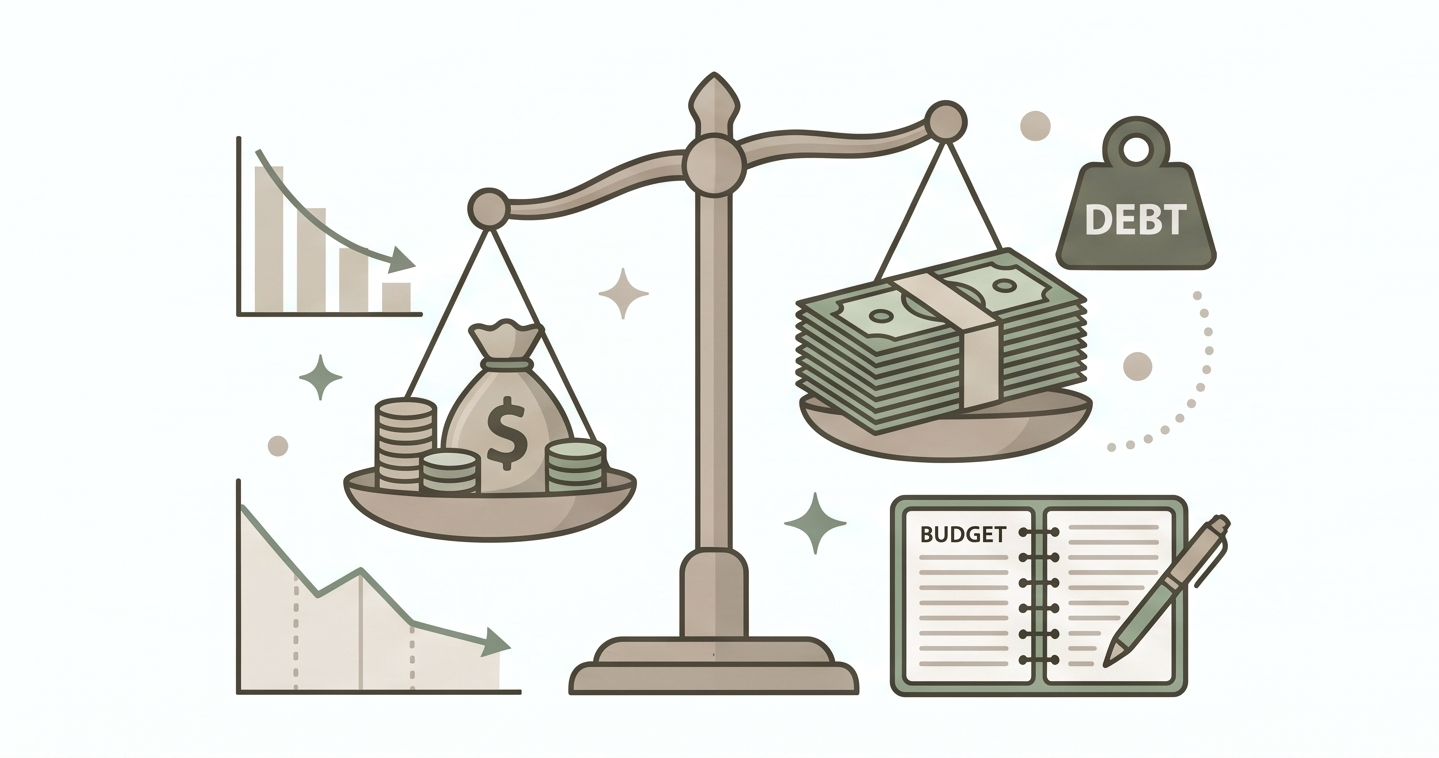
There is a story that repeats itself with surprising regularity. Someone earning two thousand a month aspires to reach three. When they reach three, their expenses have grown in parallel and the sense of financial constraint is practically the same as before. A few years later, they earn four and a half thousand and wonder where the money goes. Their net worth has barely moved. Their income has grown. Something has been lost along the way.
That something has a name: lifestyle inflation. It is the process by which spending tends to grow at the same rate as income, or faster, neutralising the benefits of earning more.
What lifestyle inflation is
Lifestyle inflation — also known as lifestyle creep in the personal finance literature — describes the pattern by which each income increase generates a proportional increase in spending. The result is that the margin available for saving or investing remains constant or even decreases in relative terms.
The phenomenon does not distinguish between income levels. It appears equally in people moving from one thousand five hundred to two thousand a month as in those moving from eight thousand to twelve thousand. The ratio between what is earned and what is spent tends to remain stable, regardless of the starting point.
It is also not necessarily about isolated irrational decisions. The increase in spending tends to happen through adjustments that seem reasonable one by one: moving to a better flat when you can afford it, changing cars after a few years, adding subscriptions, eating out more often, flying business class when the tickets are manageable. None of those decisions looks like a mistake in the moment. The problem is the pattern they form when added together.
The psychological mechanisms that drive it
Understanding why this happens helps anticipate it. This is not a failure of willpower — it is a set of well-documented cognitive mechanisms.
Hedonic adaptation. The pleasure produced by a new good or experience diminishes over time. The car that seemed extraordinary in the first month becomes the ordinary car after a year. To maintain the same level of satisfaction, a larger or different stimulus is needed. Earning more provides the resources to keep raising the bar, but the resulting satisfaction is always temporary.
The implicit reward. A pay rise carries with it, in our culture, the idea that one can “afford more now”. That mental frame turns additional spending into something that feels not just reasonable but deserved. It is difficult to resist what is psychologically perceived as the natural fruit of effort.
The discretionary spending category expands. What was once a luxury becomes a standard, and what was a standard can come to feel insufficient. The occasional dinner at a good restaurant becomes the norm. The three-star hotel stops satisfying once you have travelled in four-star ones. Categories recalibrate upward, and there is no comfortable way back.
The reference point problem
One of the reasons lifestyle inflation is so difficult to detect from the inside is that we always compare ourselves to our immediate environment, not to the self we were five years ago.
When income grows, the social circle tends to change. New colleagues, friends or neighbours have higher spending levels than the previous ones. Without noticing it, we adopt that new environment as the reference point for what is “normal”. Spending like them seems reasonable. Spending less feels like giving something up.
Social comparison is not irrational in the abstract: we look for external signals to calibrate our decisions because it is cognitively efficient. The problem is that those signals almost always point upward, never in the direction of your long-term financial goals.
There is a question that helps break that bias: how much was I saving and investing when I earned thirty per cent less? If the answer is “roughly the same in absolute terms as now”, something has gone wrong. A real income increase should translate into an increased margin for building wealth, not just a proportional increase in consumption.
How to break the pattern
The antidote is not frugalism or systematic deprivation. It is deciding in advance what portion of each income increase goes where.
Automate savings before noticing the increase. When a pay rise comes, the most effective recommendation is to increase the automatic contribution to savings or investment before the money enters the current account. What you do not see, you do not spend. This mechanism uses the same logic that makes spending grow automatically, but in the opposite direction.
Separate one-time expenses from recurring ones. Not all spending increases have the same impact. A one-time expense, even a large one, does not affect the budget in subsequent months. A recurring expense, even a small one, becomes a permanent commitment. Before committing to a new fixed cost, the relevant question is not “can I afford this?” but “do I want this to be part of my spending structure indefinitely?”.
Define in advance which improvements genuinely matter. Not all quality-of-life increases have the same personal value. Some improvements produce a real and sustained impact on wellbeing; others are forgotten within a few weeks. Deciding in advance, when there is no specific offer on the table, which types of spending genuinely matter to you helps resist the ones that only seem attractive in the moment.
Measure net worth, not income. Income is a flow. Net worth is the result of what you do with that flow over time. Reviewing periodically whether your net worth is growing gives a more honest picture of real financial progress than the salary figure. Many people with high incomes have low net worths. And the reverse also exists: people with modest incomes who have built solid wealth precisely because they resisted lifestyle inflation.
Earning more is a resource. Building wealth is a decision. Between the two there is no automatic connection.