The financial advice most people receive is fundamentally backwards. It says: earn your income, spend what you need to spend, and save whatever happens to be left at the end of the month. The problem with this approach is obvious once you state it plainly: whatever happens to be left is usually close to zero.
The financially effective approach reverses the sequence. Earn your income, redirect savings and investment contributions automatically before they enter your spending account, and live on the remainder. What you do not see, you do not spend.
The problem with willpower
Relying on willpower to make good financial decisions consistently is not a viable strategy. Not because people lack willpower, but because willpower is a limited resource that depletes under stress, fatigue and competing demands — and money decisions frequently arise under exactly those conditions.
The research on decision fatigue is relevant here. After a long, demanding day, people make systematically worse decisions across a range of domains, including financial ones. The person who commits in the morning to saving £200 this month and does not automate it faces that decision again under worse conditions later in the month, when their spending account is lower, a tempting opportunity has presented itself, and the month has not gone entirely as planned.
Automation removes the decision entirely. There is no moment of temptation because the transfer has already happened. The only available money is the money available for spending, and that amount has already been calculated to include an adequate savings allocation.
The payday architecture
The most effective autopilot system works as follows.
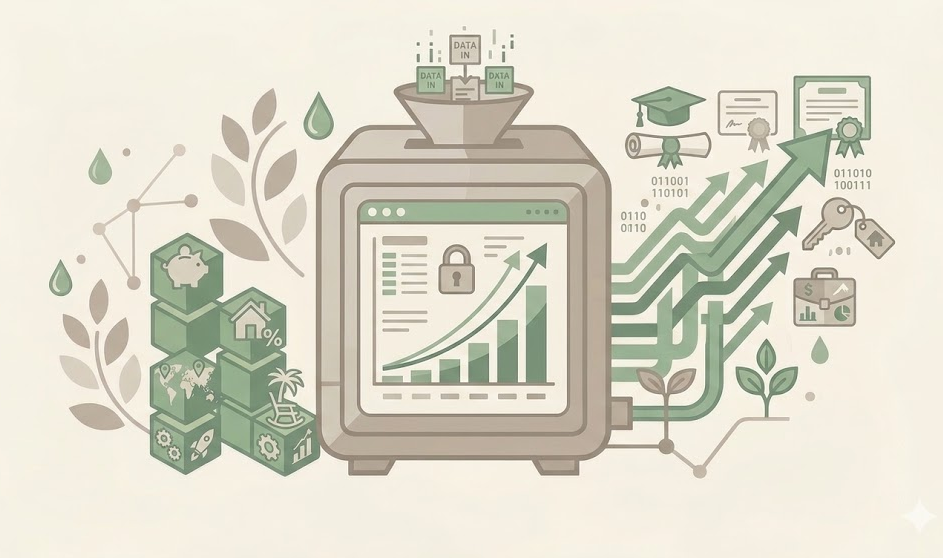
On the day income arrives — payday — automatic transfers execute immediately or within 24 hours. These transfers move money to:
- The emergency fund account (until the target balance is reached)
- The investment account or pension contribution
- Any sinking funds for known future expenses (annual bills, holiday, car maintenance)
- Any additional debt repayment beyond the minimum
What remains in the main current account after these transfers is what is available to spend during the month. This is the operating budget — not an aspirational number, but the actual, already-committed spending capacity.
The elegance of this structure is that it does not require ongoing discipline. Once set up correctly, it runs automatically every month without any active decision. The financial architecture does the work that willpower otherwise has to do.
Setting up the system
The practical steps depend on your banking setup, but the logic is universal.
First, establish the accounts you need. At minimum: a current account (already have this), a separate easy-access savings account for the emergency fund, and an investment account or pension contribution mechanism. If you want sinking funds, a savings account that allows separate “pots” or sub-accounts is useful — most digital banks offer this.
Second, calculate your monthly allocation. Work out what the correct monthly contributions to emergency fund, investments and sinking funds should be, based on your current financial picture and the targets established from the 50/30/20 framework.
Third, set up the standing orders. Log into your bank and create recurring transfers timed for the day after payday (one day after to ensure the income has cleared). Each transfer should go to the correct destination account. Once set up, these run automatically each month.
Fourth, review what remains and confirm it covers your essential costs plus a reasonable discretionary amount. If it does not, the contributions are temporarily too high and should be adjusted — it is better to save a realistic amount automatically than an aspirational amount that will require reversing.
The power of pre-commitment
Behavioural economists call this kind of system pre-commitment: making a binding decision in advance, when your thinking is calm and considered, that governs your behaviour in future moments when conditions may be less ideal.
The classic example is the pension contribution taken directly from your payslip before you receive your net pay. Most people adapt to whatever their take-home pay is, regardless of what the gross figure was. They live on their net pay without experiencing the pension contribution as a loss, because it was never available to spend.
The same principle applies to any automated saving. The adjustment happens once — to a slightly lower perceived income — and then spending naturally calibrates to that level.
Research on automated savings confirms this effect repeatedly: people who automate contributions save substantially more than people with identical incomes who save manually, without reporting meaningfully higher financial stress. The automation makes the adjustment invisible rather than effortful.
Maintaining the autopilot
A financial autopilot is not fully set-and-forget. It needs a review roughly twice a year and whenever income or major expenses change significantly.
The review should check: are the contribution amounts still appropriate given current income? Has the emergency fund target been reached (in which case that transfer can be redirected to investments)? Are the sinking funds tracking to cover their intended expenses? Are there new financial goals that need a dedicated sub-account?
The structure should also be reviewed after any significant life change: a new job, a pay rise, a new relationship or cohabitation, a child, or a change in major expenses.
Between reviews, the system should require no attention. That is the point. Financial progress should happen in the background, not as an ongoing act of willpower.