Generative artificial intelligence has opened new possibilities for personal knowledge management that five years ago were science fiction. But it has also generated a confusion that is worth clearing up from the start: AI can amplify your system, but it cannot replace the thinking that makes it work.
AI does not think for you
The biggest mistake when integrating AI into any knowledge system is using it as a substitute for processing. If you read an article and ask AI to summarise it, you get a summary. But that summary does not contain your ideas, your connections, your perspective. It is the article, compressed, filtered by AI, not by you.
Personal knowledge is built with the effort of processing, reformulating and connecting. If you delegate that effort to AI, the knowledge you “have” is borrowed and fragile. The moment you do not have access to AI, you will have learnt very little.
That said, there are uses of AI that genuinely expand the capacity of your system without replacing your thinking.
What AI can do well
Transcription and extraction. AI is excellent at converting non-textual content (audio, video, images) into text you can work with. This is a pure support function: it facilitates access to material without doing the processing for you.
Question generation. After reading something, you can ask AI to generate questions about the text. Not to answer them, but to use them as a guide for your own processing. “What questions would someone ask who wants to understand this text deeply?”
Assistance in synthesis. When you have a synthesis draft, AI can point out inconsistencies, suggest angles you have not considered, or identify claims that need more support. It is an ego-free reviewer, available at any time.
Semantic search. AI-enabled tools can search your note system not by exact words but by meaning. “Show me notes related to the idea that scarcity improves creativity” returns results that a conventional search would not find.
RAG: your system as AI context
RAG (Retrieval Augmented Generation) is a technique that connects a language model with a specific knowledge base — in this case, your own notes — so that AI responses are grounded in your material, not just in the model’s generic training.
In practice, this means you can have a conversation with an AI that “knows” your note system and can help you find connections, answer questions and draft texts from your own material.
It is a powerful tool, but it requires that the source material (your notes) be good. A note system full of unprocessed captures and context-free quotes produces equally superficial AI responses. The quality of AI output is proportional to the quality of the input you give it.
AI as interlocutor
Luhmann described his Zettelkasten as an interlocutor with whom he could hold conversations. AI offers something similar but more interactive: you can present it with an idea in progress and ask it to challenge the idea, point out its weak points, propose counterexamples.
This function is not that of a validator (AI tends to be agreeable). It is that of a devil’s advocate: useful precisely because it does not have the same blind spots you have.
What AI cannot do
AI cannot have your perspective. It does not have your history, your context, your values, your specific projects. It can imitate perspectives, but it cannot have yours.
AI cannot decide what is important to you. It can filter by statistical relevance, but not by personal relevance. What matters in your life and work is something only you can determine.
AI cannot replace experiential learning. Operational knowledge — that which is learnt by doing — is not accessible to a system that only processes text.
How to integrate it without depending on it
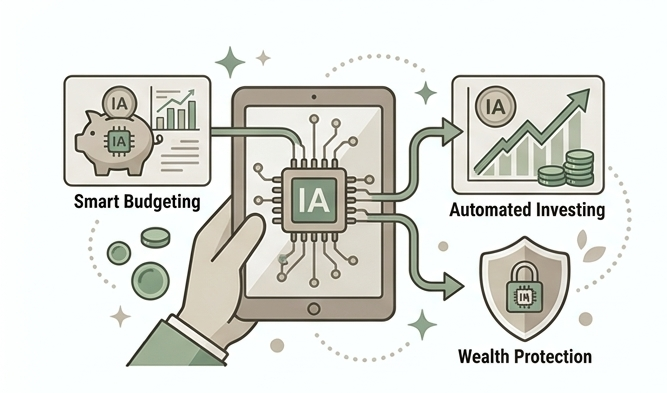
The healthy integration of AI into your knowledge management system has a general rule: use it to facilitate access and expression, not to replace thinking.
Facilitate access: transcription, extraction, semantic search. Facilitate expression: review, question generation, inconsistency detection. Do not delegate: the processing of ideas, taking a position, genuine synthesis.
The knowledge system is yours because you did the work of building it. AI can be a good assistant, but it cannot be the owner.
In the final block we talk about how to keep all of this working in the long term: reviews, common mistakes and the evolution of the system.